2004 Sugarbush Cross
Country and Racing Experience Camp. Held in conjunction with the Region
1 Championship, June 15-26
One thing that is a near constant among glider pilots it is the drive to
improve our flying skills. Unfortunately when we solo there is not much
support in this country for teaching the next phase of a glider pilots
training namely cross country and competition flying. These skills are
normally self taught and can take years to master. Sure you can read the
books, analysis the flights, and make timid attempts at departing the
airport but how about a week on intensive hands on training and flying
dual with the masters of the sport? All in a safe and fun environment?
That is what the 2004 Sugarbush Cross Country and Contest Camp was all
about. Organized by Doug Jacobs and members of the U.S. soaring team and
others this camp was a big success this year.
A very wise instructor onece said, "when you learn soar your in for a
couple of years of entertaining flying, but when you learn to go cross
country or fly competitively you have a lifetime of adventure ahead of
you".
Many a new cross country
pilot developing his or her skills will also want to sample the racing
environment. Why? Different reasons for all but with one common thread –
the experience of flying the same course with more practiced competitors
represents a tremendous learning curve toward improving pilot
capabilities. Most come back from their first competition raving about
how much they learned, and immediately set about to put it into practice
in their own flying.
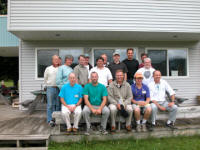
Clearly, a more organized
approach to cross country and racing would be beneficial to many. In
fact, something along these lines was pioneered by Justin Wills over the
past eight years with the British Juniors. Under Justin’s tutelage, this
group has begun to turn in amazing performances in world competition. If
we could only replicate that experience in this country, not only with
the Juniors but with all our pilots . . . . .
Several initial steps in this direction have been taken, such as Karl
Striedieck’s reverse seeding Regional comps, with expert guest lectures.
The leadership of the US Team Committee has also become active in this
vein. Guided by Committee members Tim Welles and John Seaborn, and with
that dynamo of enthusiasm Garrett Willat providing both fundraising and
organization, the Juniors Camp at Moriarty proved to be an outstanding
success, reported elsewhere.
See the 2004 Junior Camp by clicking here...
| “Having attended a
significant number of soaring related seminars, conventions, CFI-G
revalidation clinics, and contests over the past twenty years, I
can truly say that this one was the best” John Dezzutti |
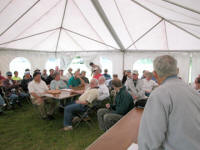
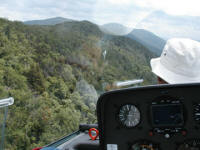
To target a broader base
of pilots, a two week course was organized in conjunction with the
Region 1 competition at lovely Sugarbush Airport in northern Vermont,
labeled the Sugarbush Cross-Country Racing Experience, somewhat
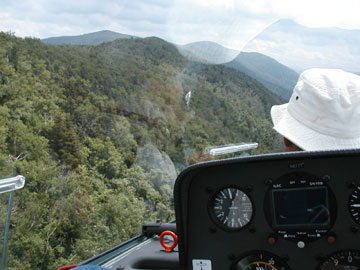
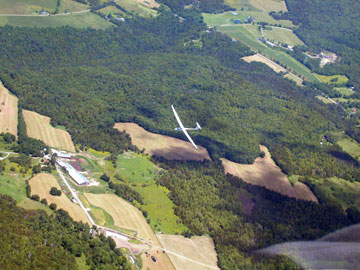
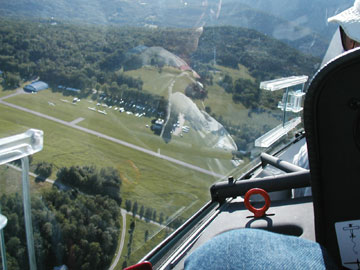
awkwardly. Located in the heart of the beautiful Green Mountains, the
‘bush offers breathtaking views of forest and valley, ski areas, Lake
Champlain, even the home of Ben and Jerry’s ice cream! We are much
indebted to the Sugarbush Soaring Society for its strong support of this
somewhat experimental venture, particularly the enthusiastic support of
president Dave Ellis.
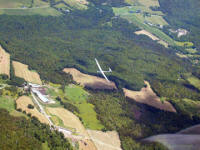 The
course consisted of two phases – a cross-country refresher for the first
week, and an introduction to racing during the second week amidst the
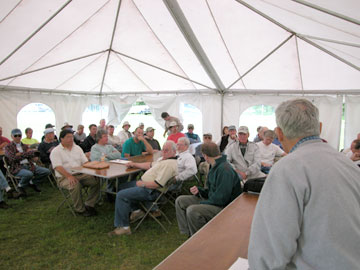
Region 1 contest proper. The daily schedule began with one to two hour
lectures in the morning on a progression of topics starting with the
basics and ending with sophisticated contest strategy. After a weather
briefing and task discussion, we all went out to fly, chattering
constantly on 123.3 about weather, lift conditions, routing, etc.
(during the contest proper we all flew in Sports Class, under a waiver
from the Rules Committee Chairman to allow the instructional value of
exchanging information – and had most of the contest participants
listening in on our frequency!). At the end of the day we’d enjoy a cool
one while communally reviewing GPS traces projected on screen, utilizing
the excellent SeeYou software, while each pilot described his flight in
some detail, discussing what went right and wrong, particularly the
wrong part. Confession is always good for the soul, even better for
avoiding reoccurrence.
The
course consisted of two phases – a cross-country refresher for the first
week, and an introduction to racing during the second week amidst the
Region 1 contest proper. The daily schedule began with one to two hour
lectures in the morning on a progression of topics starting with the
basics and ending with sophisticated contest strategy. After a weather
briefing and task discussion, we all went out to fly, chattering
constantly on 123.3 about weather, lift conditions, routing, etc.
(during the contest proper we all flew in Sports Class, under a waiver
from the Rules Committee Chairman to allow the instructional value of
exchanging information – and had most of the contest participants
listening in on our frequency!). At the end of the day we’d enjoy a cool
one while communally reviewing GPS traces projected on screen, utilizing
the excellent SeeYou software, while each pilot described his flight in
some detail, discussing what went right and wrong, particularly the
wrong part. Confession is always good for the soul, even better for
avoiding reoccurrence.
| "The meta lesson I
learned is that soaring is a coachable sport. This had simply
never occurred to me, as I had never been coached in soaring.” Ed
Crawley – Daily Winner |
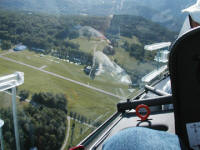 Leading
the charge was a bevy of instructors, including former World Champions
George Moffat and Doug Jacobs. However the star of the course was
clearly Gerrard “G” Dale.
Leading
the charge was a bevy of instructors, including former World Champions
George Moffat and Doug Jacobs. However the star of the course was
clearly Gerrard “G” Dale.
About
Auther Doug Jacobs
Few pilots have had the racing success of Doug Jacobs. He has won
the US National Championships eight times including the
prestigious
Hatcher
“Top Gun” Trophy in 1994, 1995 and 2003. Internationally Doug became
World Champion in the 15-Meter Class and was awarded the Unberto
Nannini trophy at the 1985 World Gliding Championships in Reiti,
Italy. Since his win in 1985 Doug has represented the United
States in seven World Gliding Championships finishing as the
15-Meter Bronze Medallist in both the 1987 and 1991 Championships.
Beyond US National and World Gliding Championship success, Doug
has competed in the Hitachi Masters of Soaring three times winning
the event in 1986. Doug also was a participant in the 1995
Takikawa Masters of Soaring in Japan and a Bronze Medallist in
1998 Samedan Jubilee Competition in Switzerland. Having soloed at
age 27 in 1973 Doug flew his first Nationals at Elmira, New York
in 1980 earning Diamond badge #478 along the way. He has
approximately 3700 hours total soaring hours. A strong supporter
of the sport Doug is Treasurer and Director-at-Large of the
Soaring Society of America, a Lincoln Award winning contributor to
Soaring Magazine and member of Sugarbush Soaring (Vermont),
MIT Soaring Association (Massachusetts), and Greater Boston
Soaring Club (Massachusetts). Doug was elected to the US Soaring
Hall of Fame in 1990. As his biggest fans Doug lists his wife
Martha and daughters Charlotte and Molly. |
G has been active as a British National
Team Coach, a gliding instructor at Lasham, a course leader for Gavin
Wills’ Mountain Experience in Omarama, New Zealand, and is an actively
competing top-ten British national pilot. G’s morning presentations,
delivered in that organized and precise way that we Americans so envy
the Brits for, were succinct, informative, and comprehensive. Schooled
in a variety of teaching techniques including both dual and lead and
follow, G was also our leader in the air, coolly deliving flying tips,
weather and course analysis while managing to win the Sports Class quite
handily. Language was a bit of a problem however – when G directed us to
twit something, one wag questioned whether this activity took place
while vertical or horizontal – in fact he was asking us to think
something over (I think).
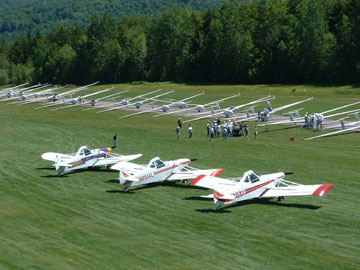
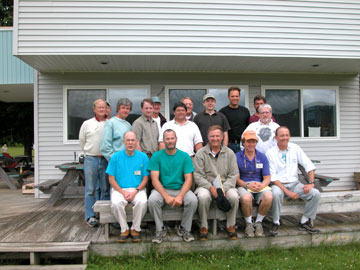
We attracted 12 brave souls as flying
participants (we required a previously accomplished Silver Distance or
better) as well as five or six “auditors” who followed the ground
portions and flight debriefs but flew on their own. We were delighted to
attract two juniors as well – Kevin Christner and Vit Hradecky for whom
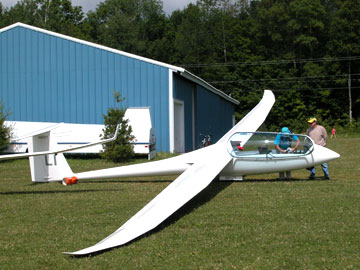
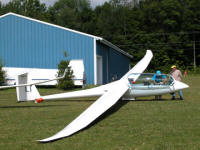
tuition was waived. Everyone brought his own glider but we were
extremely fortunate to have available a Duo Discus (a real rock star
 of
a ship, the one starring in Juan Mandelbaum’s outstanding video A Fine
Week of Soaring), enabling everyone to have the opportunity to observe
at close range a real racing mission. This later generation of two place
gliders, which include the Duo, DG 500/1000 series and others, provide
outstanding platforms for this type of instruction; comfortable,
remarkably good handling for 20+ meter ships, and performance that keeps
them up any of the latest Standard or 15 Meter gliders.
of
a ship, the one starring in Juan Mandelbaum’s outstanding video A Fine
Week of Soaring), enabling everyone to have the opportunity to observe
at close range a real racing mission. This later generation of two place
gliders, which include the Duo, DG 500/1000 series and others, provide
outstanding platforms for this type of instruction; comfortable,
remarkably good handling for 20+ meter ships, and performance that keeps
them up any of the latest Standard or 15 Meter gliders.
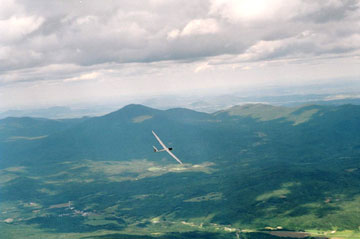
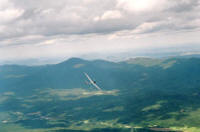
The weather gods were good to us as well. We managed to fly most days in
a broad variety of thermal, ridge and wave lift, and were able to knock
off courses up to and including 200 milers. Safety was a particular
focus; the few initial landouts that several participants had were
handled excellently, and no participant suffered any ship damage.
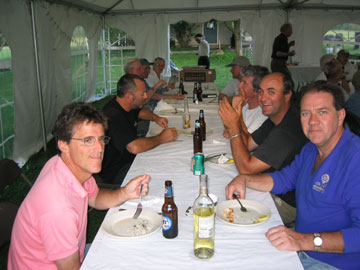
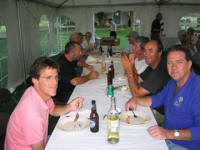
The camaraderie that developed between participants was terrific. Almost
no one had a crew – we helped each other rig and derig - and several
participants joined that blessed group among us who cheerfully volunteer
to go on retrieves when they don’t have to. Most nights we met at one of
the Mad River Valley’s excellent restaurants (OK, our favorite was the
pizza joint with the cold beer) for friendly debriefing and lie
swapping, and got to know one another as good friends. Feedback from
participants was enthusiastic.
 To
assist in review during those long cold winter nights, as well as for
potential future use, the assembled course materials were made available
to all on a CD into which we also crammed as many of the collected
photos of the course and contest we could muster.
To
assist in review during those long cold winter nights, as well as for
potential future use, the assembled course materials were made available
to all on a CD into which we also crammed as many of the collected
photos of the course and contest we could muster.
What comes next? Still in the discussion phase, but the US Team
Committee is mulling over the prospects for future Juniors camps as well
as Cross Country and Racing camps (particularly if we can attract G back
to our shores), so watch this space for future announcements. Let us
know if you have suggestions, let us know quickly if you’d like to help,
call me personally right away if you have a two place glider or two we
could build the next course around! I think we’re on to something here.
Doug Jacobs
See U.S. Team Sponsored 04 Junior Development
Camp - Click Here